At a Glance
Choosing a warehouse door depends on stored goods, temperature control, site conditions, access needs and security. Automatic doors can help limit heat exchange and support frequent deliveries, while fire-rated doors and security shutters address specific safety and access requirements. The final choice should suit the facility’s layout, operations and maintenance needs.
Contact Doorway Services to discuss your warehouse requirements and find a suitable door solution for your premises.
How to Choose a Warehouse Door
Wondering how to choose a warehouse door? Choosing the right warehouse door depends on what you store, how people access your facility, the foot traffic you receive and the conditions in and around your premises. Getting the warehouse door selection right can help protect stored goods, manage indoor temperatures and support daily operations.
However, no single door type suits every warehouse, so understanding your operational needs matters. This can help you choose from the available warehouse door types and identify the features that matter most to your business.
Factors to Consider When Choosing a Warehouse Door
1. Storage Requirements
In most cases, what you store within your warehouse won’t affect the type of business door you’ll need. However, in some cases, you may need a specific door type depending on the characteristics of the products stored inside.
For instance, if you store liquids or perishable food products in your warehouse, the goods might freeze or spoil. This is why maintaining a specific temperature to prevent liquids from freezing and perishable items from spoiling is essential. In this case, automatic doors can limit heat exchange by reducing how long an entrance stays open. The right choice, however, depends on your storage conditions and temperature control requirements. Similarly, if you store highly flammable products in your warehouse, you must assess the fire risks and applicable safety requirements. The government’s guidance on workplace fire safety responsibilities explains the responsible person’s duties in managing fire safety. A suitably specified fire-rated steel door is ideal here, depending on the requried fire resistance and the intended use of the opening.
2. Weather and Location
Your warehouse’s location and exposure to external conditions can influence your door choice.
If your warehouse is in a residential area, noise from your facility can disturb people nearby. An appropriately selected insulated door can help reduce noise transmission, depending on its construction and installation
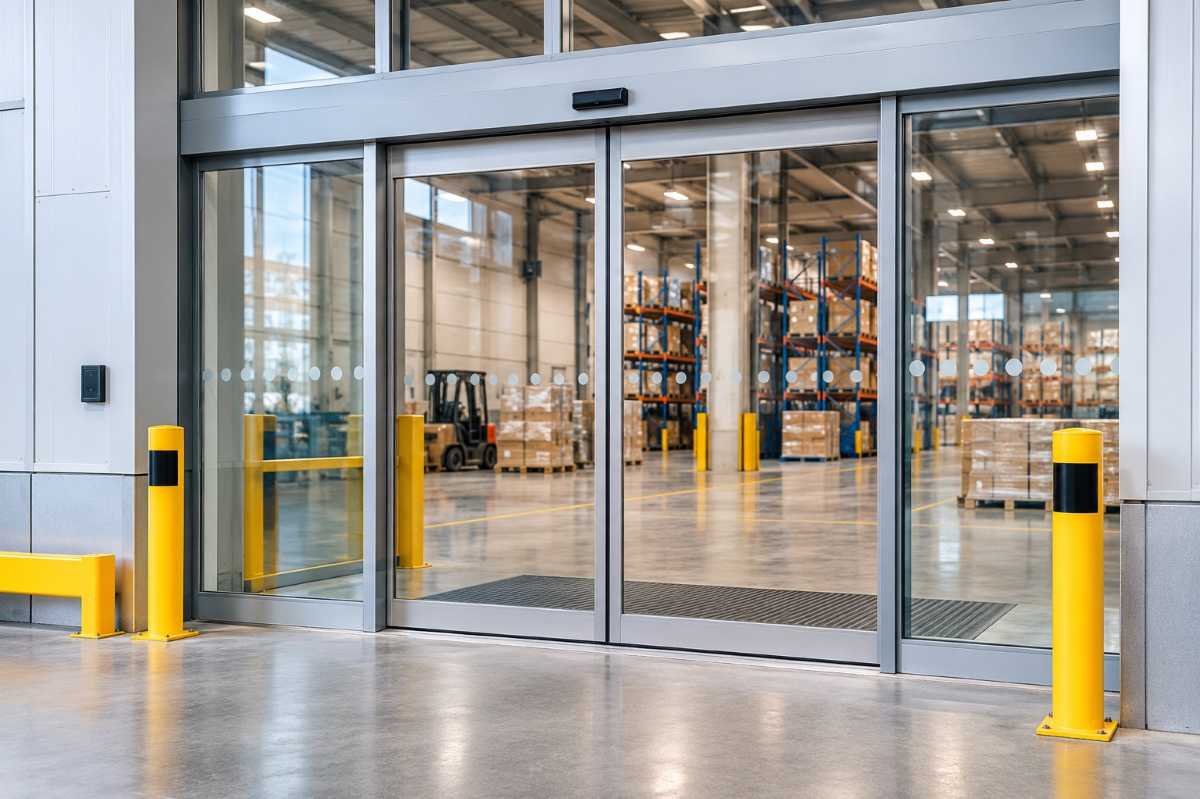
Every time that your door opens and closes, heat can escape from the facility. This can increase energy consumption as the system works to restore the temperature to normal. If temperature control is critical in your facility, consider installing automatic doors that open and close faster to reduce heat exchange in the warehouse. To explore this further, read our guide to making your business more energy-efficient to learn how to reduce energy waste.
Automatic swing and sliding doors can fit facilities that need frequent access while managing temperature changes. During colder months, these doors can help maintain comfortable temperatures for working staff who rely on boilers and heaters to stay warm. The Health and Safety Executive’s guidance on workplace temperatures explains employers’ responsibilities for maintaining reasonable workplace temperatures.
3. Ease of Accessibility
For fast-paced businesses handling multiple deliveries and collections, waiting for doors to open and close can disrupt workflows. Over time, these delays affect busy facilities where staff, forklifts and goods move through the entrance regularly. Choosing suitable industrial warehouse doors can help keep these movements running smoothly.
Accessibility for people is important, too. For powered pedestrian doors, EN 16005 sets out safety requirements for the design and use of these systems. In commercial premises, consider duties under the Equality Act 2010, including how entrances affect disabled people. This also applies to warehouses, so door selection should account for the needs of people using the building alongside vehicle movements and operational requirements.
Accessibility should never compromise security. If you store high-value goods in your warehouse, Dane shutters can help deter unauthorised access. Where practical, a separate pedestrian entrance can also distinguish staff access from vehicle and goods movements.
4. Choose a Bespoke Warehouse Door
With business doors, you cannot take a one-size-fits-all approach. Every warehouse has different requirements, depending on its layout, the goods it stores, traffic levels and security needs.
At Doorway Services, we provide commercial door solutions tailored to your premises. Our team can help you assess your requirements and identify suitable options for your facility.
Installing the right door is only part of the process. Regular servicing and timely repairs also help keep doors operating as intended. Our commercial door repair and maintenance service supports businesses that need to maintain door performance.
Choosing the Right Warehouse Door with Doorway Services
Choosing a warehouse door means considering storage conditions, temperature control, accessibility, security and the practical demands of your operations. The right warehouse door depends on your premises and how you use the entrance.
We provide commercial door installation, servicing and repairs to help businesses maintain safe, functional entrances. We also offer a 24/7 emergency callout service across Northamptonshire.
Get in touch with Doorway Services today and discuss your warehouse door requirements and find out how we can help.