
At a Glance
Commercial door locks provide higher levels of security, durability and access control than residential locking systems. This article outlines three common types of commercial door locks used across UK businesses: mortise locks, cylindrical lever locks and panic bars. Each serves a different purpose, with the right choice depending on security requirements, building use, foot traffic and compliance considerations. Proper installation and maintenance are equally important for reliable long-term performance.
Need advice on choosing the right commercial door lock? Contact Doorway Services to discuss your requirements.
Understanding Commercial Door Locks
Commercial doors play a vital role in both the security and day-to-day operations of a business. Alongside protecting premises outside working hours, they help control access to different areas of a building and support compliance with health and safety requirements.
Without a secure door and locking system, commercial properties can be more vulnerable to vandalism, theft and unauthorised access. In some cases, inadequate security measures, such as failing to install proper commercial locks on your doors, may also complicate insurance claims following a break-in.
Commercial door locks differ significantly from residential locks because they are designed to be more durable and robust due to constant use. They also need to offer enhanced security features, such as keycard access and integrate with wider access control and security systems. Depending on the building’s requirements, businesses may need locks that support restricted access, emergency egress or master key systems.
With several types of commercial door locks available, selecting the right solution depends on factors such as foot traffic, security requirements, building layout and compliance obligations.
At Doorway Services, we install, repair and maintain a wide range of commercial locking systems. Below, we explore three of the most common commercial door lock types used across businesses.
1. Mortise Locks
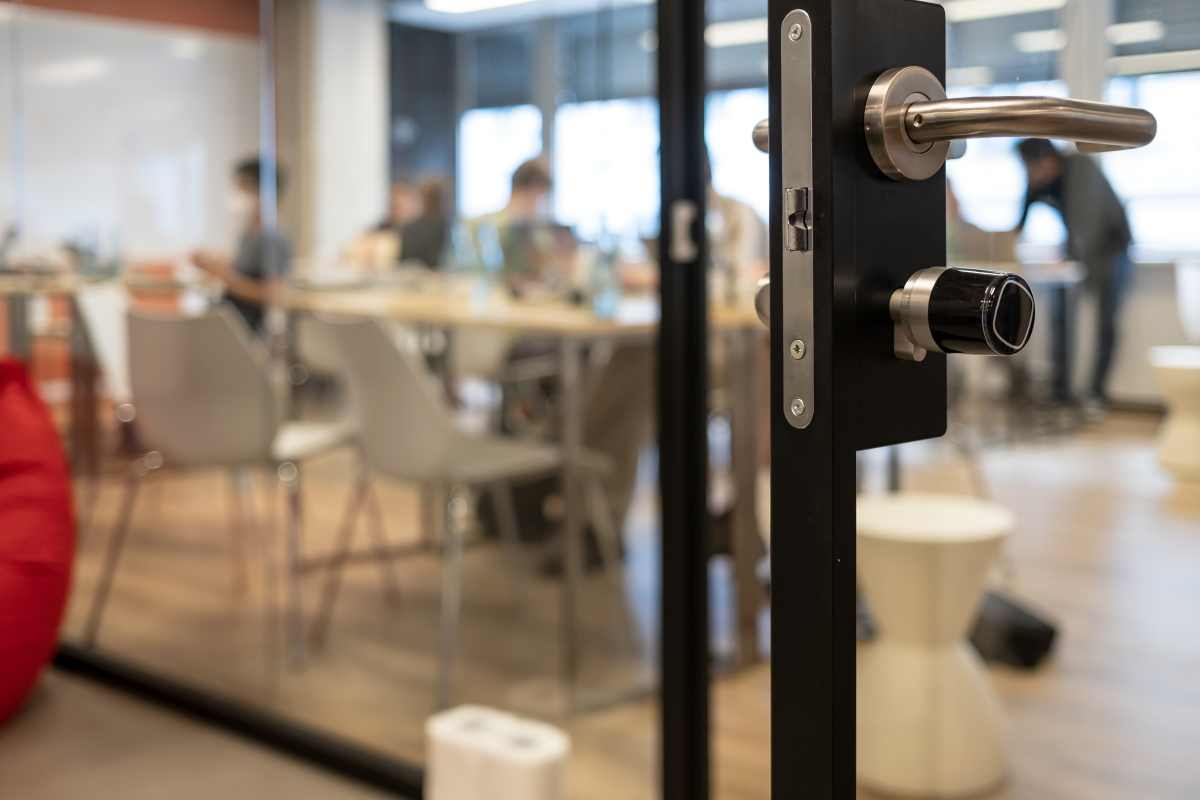
Mortise locks remain among the most widely used commercial locks due to their impressive strength and reliability. A mortise lock typically consists of a latch, a deadbolt and a lock body. These locks are installed by cutting a ‘mortise’ or cavity into the edge of the door.
They are a popular choice for commercial properties because they are tamper-resistant, as the internal locking mechanism is concealed within the door. They can last for decades, even in high-traffic areas where locks are heavily used.
As one of the most secure types of commercial locks, mortise locks use a key-operated locking mechanism that offers greater protection than standard door hardware. Their robust metal construction helps them withstand frequent use, attempted forced entry and demanding commercial environments. Suitable for both single and double doors, they are commonly installed in schools, offices, and retail premises where reliability and security are essential.
2. Cylindrical Lever Locks
Cylindrical lever locks are among the most common commercial door lock types found throughout the region. Designed for convenience and frequent use, they provide a practical balance between security and cost effectiveness.
These locks operate using a keyed cylinder combined with a lever handle and are commonly installed on office doors, meeting rooms, staff areas, washrooms and other such secondary entrances.
One reason cylindrical lever locks remain popular is their versatility. They are available in various security grades and can be incorporated into master key systems, allowing businesses to manage access across multiple areas of a building.
While generally quicker and easier to install than mortise locks, they still provide dependable security when correctly specified and maintained. For many businesses, these locks offer an effective solution without the need for more complex access control systems.
3. Crash Bars / Panic Bars
Crash bars, also known as panic bars, are commonly installed on emergency exits and fire doors. Unlike traditional locking systems, they are specifically designed to allow fast and unobstructed escape during an emergency.
When pressure is applied to the horizontal bar, the locking mechanism retracts automatically, allowing the door to open quickly without requiring a key, handle rotation or specialist knowledge.
Panic hardware plays an important role in commercial buildings where larger numbers of people may need to exit safely in the event of an emergency. In many settings, the use and maintenance of emergency exit hardware forms part of broader fire safety responsibilities. Because these systems are critical to occupants’ safety, regular inspection and maintenance are essential to ensure they continue to operate correctly when needed.
If you are installing a new fire door or upgrading emergency exit hardware, Doorway Services can provide expert advice, installation and ongoing maintenance support.
Get in Touch with Doorway Services for Expert Door Repairs
These are the 3 most popular types of commercial door locks used across businesses, known to ensure safety while promoting ease of use and durability.
Choosing the right locking system is only part of the process. Correct installation and ongoing maintenance are equally important for long-term performance, along with security and compliance
At Doorway Services, we support businesses with commercial door installation, repairs, maintenance and lock upgrades. Whether you require assistance with automatic doors, sliding doors, swing doors, fire doors or locking systems, our experienced team can help.
Looking to upgrade your commercial door locks or improve the security of your premises? Speak to our team today to discuss your requirements.